Fixing bad voice data before it's recorded
Most voice datasets are people reading sentences. Real speech isn't like that. Spontaneous Speech asks contributors a question and records their answer, in their own words and language. That makes the data more useful and much easier to get wrong.
- Role
- Senior designer
- Timeline
- 2024 – 2026
- Worked with
- Two engineers, product, language specialists, global contributor community
- Scope
- 0-to-1 product: question, answer, transcribe, and tag flows
- Research
- 30-participant study across three products
- Outcome
- Shipped as Spontaneous Speech 1.0 in 58 languages, growing to 62 language datasets in release 2.0.
Where bad data comes from
Two failures did the most damage. People recorded in the wrong language, because nothing stopped them. And people got cut off or caught mid-thought, because they didn't know when recording started.
Both looked like small UI issues. Both ended up as unusable clips that reviewers had to catch by hand, one at a time.
Fixing bad data after the fact costs reviewer hours. Preventing it at the moment of recording costs a few seconds of the contributor's time. That tradeoff drove every decision.
Research
Spontaneous Speech was part of the same 30-participant study as the AI assistant and the upload flow. Sessions with contributors and reviewers showed where the bad data came from: contributors didn't know when recording started, reviewers were constantly pausing and relistening with almost no controls, and the community asked for a way to tag speech that mixes languages.
Decisions
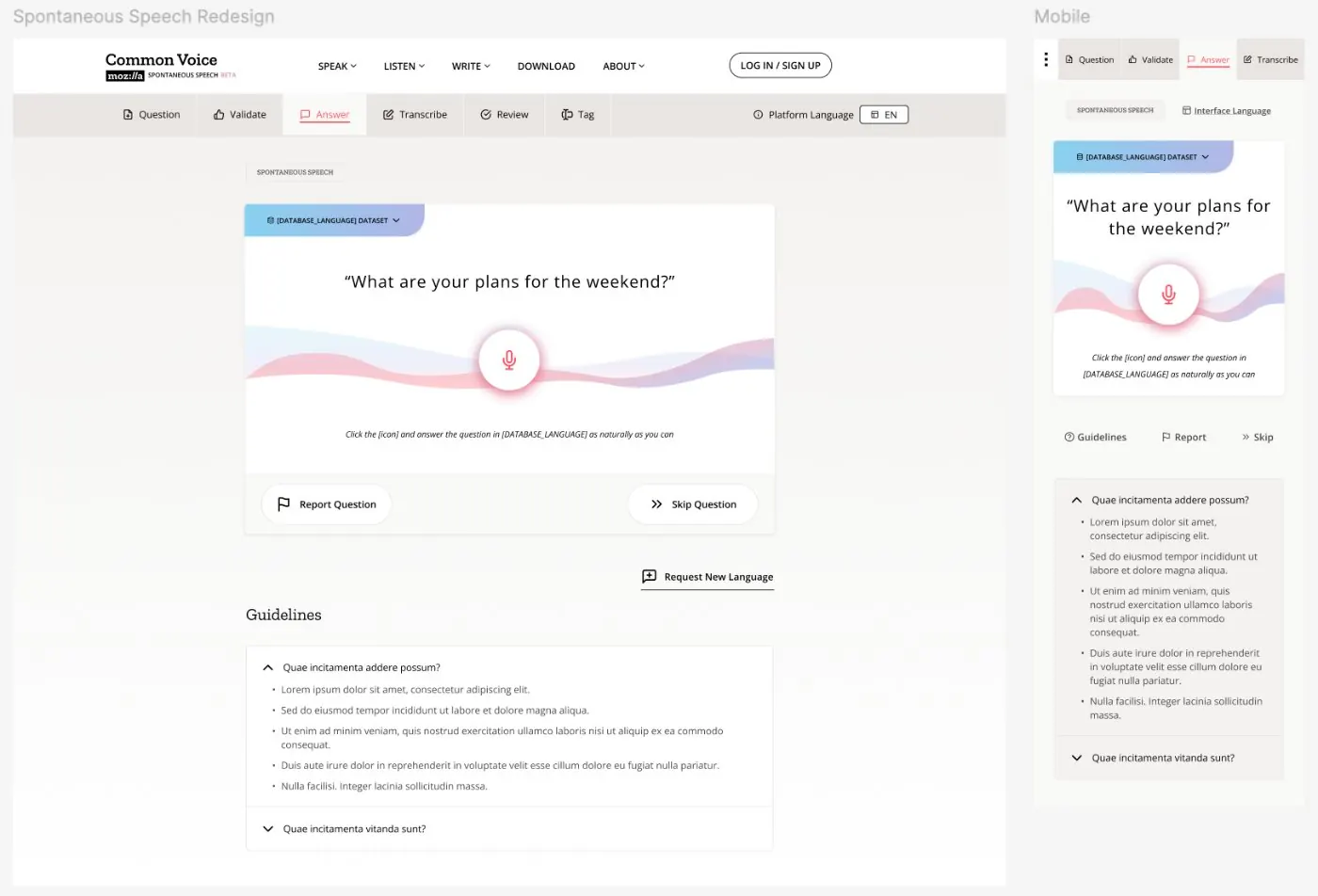
- Language first, everything else locked. The form stays disabled until you pick a contribution language. A reminder stays on screen while you record.
- A five-second countdown. You know exactly when recording starts, and you get a moment to think before you speak. Better answers, fewer retakes.
- Mobile-first and forgiving. Phones are where contributors are. Recording your own voice makes people self-conscious, so the flow makes it easy to try again.
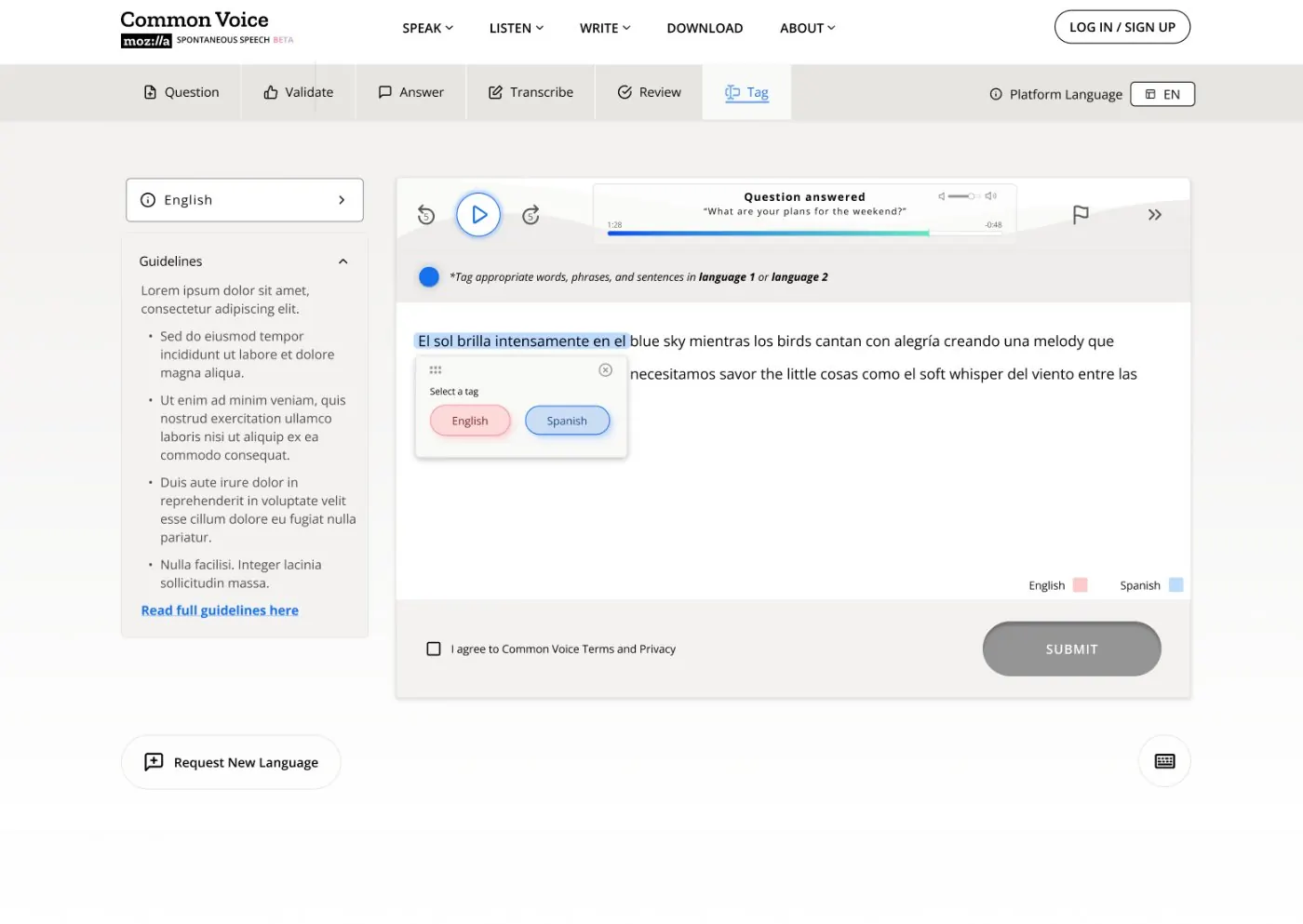
- A player built for transcription. Reviewers were pausing, skipping, and relistening with almost no controls. They got a scrubber, elapsed and remaining time, and five-second skips both ways.
- Tagging for code-switching. The community asked for this. Real speech mixes languages mid-sentence, like Spanish and English, so transcribers can tag phrases by language instead of forcing one label on the clip.
Designing for the whole pipeline
The contributor screen is only the front stage. Behind it are reviewers, transcribers, and the people training models on the result. Every choice was judged by what it did to the dataset, not just whether the screen felt good.
I built the interactions from the design system's code-first components, so what engineering shipped matched what we tested.
Where it landed
- A new dataset, not just a feature. Spontaneous Speech 1.0 released in September 2025 in 58 languages. Release 2.0 in December 2025 grew to 62 language datasets.
- Real speech at volume. 357+ hours of unscripted answers collected, the kind of conversational audio that read-aloud datasets can't provide.
- Built for how people talk. Code-switching tags mean speech that mixes languages is kept and labeled, not thrown out.
Sources: Common Voice 24.0 release